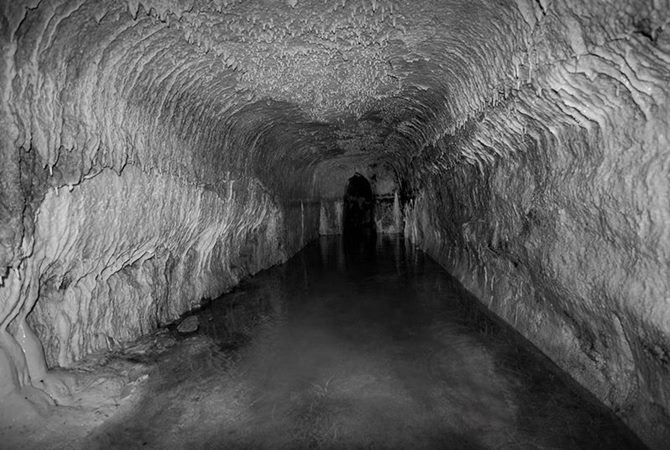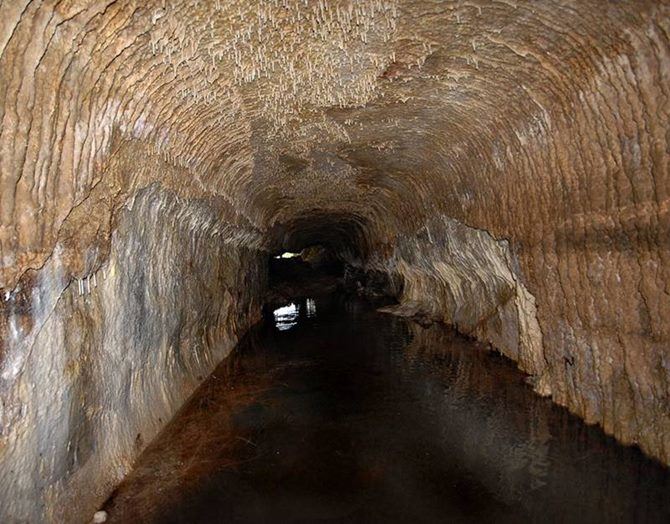

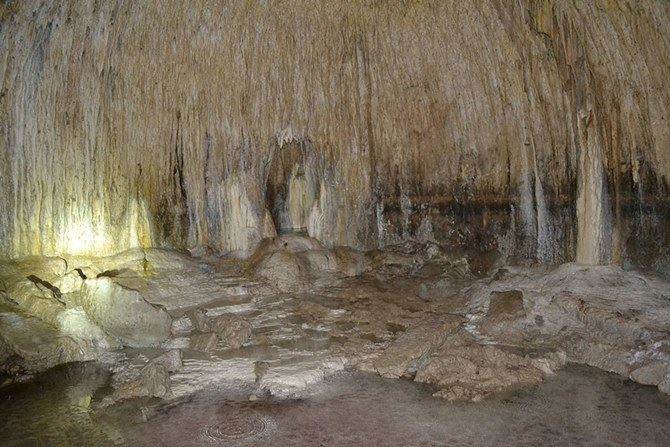
Enveloped in the silence of the nature of Sant'Ilario dello Ionio and concealed for centuries by vegetation, the Magna Greco Nymphaeum - also known as Grotta di Gioppo - is a place that combines archaeological fascination, spirituality and myth. Excavated in the rock between the 1st century B.C. and the 1st century A.D., this extraordinary sacred place testifies to man's mastery of and devotion to the forces of nature and water.
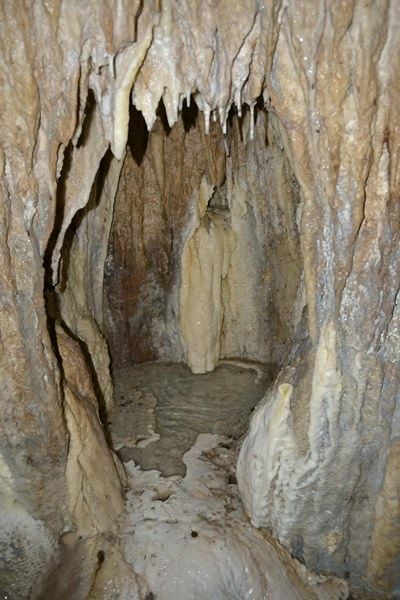
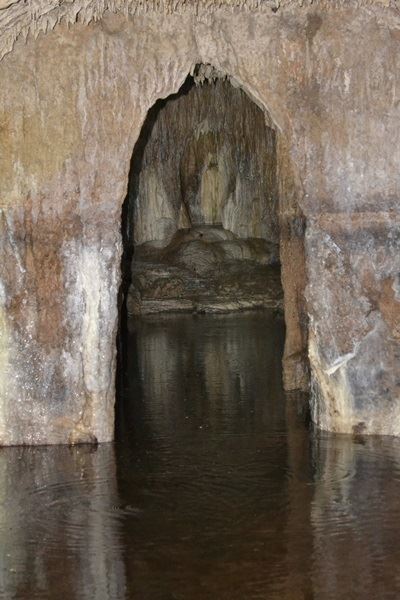
The entrance, a thirty-metre straight corridor, leads into a central chamber surmounted by a four-metre dome, where the stone comes alive with stalactites and sulphurous concretions. A spring gushes from a niche , feeding small pools and channels, created to channel water with different properties: one sulphurous, intense and pungent, and the other crystalline and light.
Two opposite natures, interpreted by scholars as symbols of death and rebirth, perhaps linked to Orphic rites or purification ceremonies dedicated to nymphs, guardians of springs and fertility. Visiting the Magno Greco Nymphaeum means immersing oneselfin a world suspended between myth and history, where water, light and stone tell of a sacred past that continues to vibrate in the heart of Locri.